Whether you’re a long-time septic system user or have recently had one installed, this Septic Tank Regulations guide is for you if you’re in NSW.
This article is a must-read if you’re transitioning from city to country living or considering a new septic installation in NSW. Discover how to effectively manage and operate your septic system to prevent sewage pollution, ensuring your family’s health and the environment’s quality remain uncompromised.
Firstly, septic tank regulations vary by region and are subject to change. In New South Wales, the local council or the NSW Environment Protection Authority (EPA) typically outlines septic system regulations. These regulations cover aspects such as installation, maintenance, and environmental protection. To get accurate and up-to-date information on septic tank regulations in NSW, we recommend visiting the official website of the NSW EPA or contacting your local council’s environmental health department. Alternatively, we’ve supplied and installed thousands of Septic Systems throughout NSW and can provide expert advice or point you in the right direction.
SO WHAT NSW SEPTIC TANK REGULATIONS DO YOU NEED TO KNOW?
NSW Government regulations now require registering every septic system with your council.

Registering is necessary so councils can monitor and manage the overall impact of the septic systems in the drainage catchment. Taken
together, that is a lot of effluent, and no one wants to swim in it.
What is septic tank registration?
Registration is like registering a car. Information about your septic system is sent to the council with an application for approval. The council issues an ‘approval to operate a system of sewage management’, which sets out the basic rules you need to follow to keep the system working well.
The details are set out in the council’s on-site sewage management strategy and local approvals policy. Both of these documents are available at your council.
A fee may be charged to help the council cover the costs of monitoring and managing public health and environmental risks associated with septic systems. People in sewered areas already pay for these costs in their sewerage rates.
How does council supervision work?

Registration is like registering a car. Information about your septic system is sent to the council with an application for approval. The council issues an ‘approval to operate a system of sewage management’, which sets out the basic rules you need to follow to keep the system working well.
The details are set out in the council’s on-site sewage management strategy and local approvals policy. Both of these documents are available at your council.
A fee may be charged to help the council cover the costs of monitoring and managing public health and environmental risks associated with septic systems. People in sewered areas already pay for these costs in their sewerage rates.
The process works like this:
- Resident sends in a SepticSafe registration and pays a fee (if required).
- Council records the details and determines a risk classification (e.g. high, medium, low).
- Council issues an operating approval, which may require regular reports or site inspections.
Note that the approval relates to the owner, not the land. When the land is sold, the new owner should notify the council and obtain approval in their name.
Your septic system may be classified according to an assessment of public health and environmental risks.
Your septic system will be assessed by your council and given a risk classification for the purpose of accountability and supervision. The classification depends mainly on the area where the septic system is located.
Many councils use a three-class risk classification scheme as set out below. Sometimes, more complex classification schemes may be necessary.
HIGH-RISK AREAS
These are highly vulnerable and sensitive environments like villages and areas close to drinking water sources, oyster leases, rivers and wetlands where the release of sewage pollution can cause much harm.
Suppose your septic system is in a high-risk area. In that case, the council will arrange regular checks to assure safety and good practices.
MEDIUM-RISK AREAS
These are vulnerable areas with a lower risk of water pollution because of factors like setbacks, good soil and vegetation and lower housing density.
If your septic system is in a medium-risk area, the council may ask you to do regular checks yourself, and it may do random audits.
LOW-RISK AREAS
These are areas where septic systems are located on good soil well away from waterways, drainage lines, homes and sensitive environments.
If your septic system is in a low-risk area, registration may be all that is required, provided you ensure that it is well-managed and maintained.
As a septic system owner, you are responsible for –
- Ensuring the house drains and tank don’t leak
- Getting things fixed if they are not working properly
- Keeping the system well-maintained
- Ensuring the system is checked regularly
- Getting the tank pumped (de-sludged) when it becomes too full to process the flow going into it
- Maintaining and protecting the absorption field
- You comply with the council’s requirements for installation, maintenance service and operation and paying fees for inspections or maintenance

Meanwhile, the council is responsible for –
- Providing general services for the protection of the environment, public health and safety
- Helping people keep their septic systems working well
- Providing a scheme of systematic management for all of the septic systems in the council area, including environmental monitoring and technical advice
- Providing advice and contact information when people need professional services to design or maintain septic systems
- Regulating the installation, operation and maintenance of septic systems, conducting audits and inspections and keeping a register of systems in use in the council area
- Providing community information and education programs
- Monitoring and reporting on the overall impact of effluent and other by-products from septic systems in the state of the environment report for the council area
- Implementing strategies for ecologically sustainable development
How to protect groundwater
Groundwater (usually from bores) has been tapped for decades, but only recently have we started to understand how vulnerable it is to contamination from surface activities. Pesticides can find their way into groundwater, as can effluent from septic systems. Locating septic systems at a safe distance from wells, bores, creeks, lakes, and houses is vital to maintaining them well.

Groundwater is easily contaminated. Make sure your septic system is located a safe distance from wells, bores, creeks, lakes and houses.
Failing septic systems can leak chemicals such as medicines, pesticides, paints, varnishes and thinners into the local groundwater. Some chemicals, even in small amounts, can harm the environment and public health.

Even if the septic system works well, these contaminants can enter groundwater under certain geological conditions. Fractured bedrock and shallow groundwater tables may also allow bacteria and viruses to be transported rapidly, contaminating nearby drinking water supplies.
Recommended buffer distances for septic systems
All land application systems
- 100 metres to permanent surface waters (e.g. river, stream, lake)
- 250 metres to domestic groundwater well or bore
- 40 metres to other waters (e.g. farm dams, intermittent streams, drainage channels etc.)
Surface spray irrigation
- 6 metres uphill, and 3 metres downhill of driveways and property boundaries
- 15 metres to dwellings
- 3 metres to paths and walkways
- 6 metres to swimming pools
Surface drip and trickle irrigation; Sub-surface irrigation
- 6 metres uphill, and 3 metres downhill of swimming pools, property boundaries and buildings
Septic tank absorption trench area
- 12 metres uphill, and 6 metres downhill of property boundary
- 6 metres uphill and 3 metres downhill of swimming pools, driveways and buildings
- 3 metres to paths and walkways

SEPTIC SHOPPING GUIDE
Investigate before you invest.
If you plan to purchase land for a new home, check before buying.
If a reticulated sewerage scheme is unavailable, you must consider a septic system or something similar. Your first step should be to obtain advice from your local council, local land use consultant or a wastewater expert.
If you are buying an existing home with an existing septic system, ask the seller a few important questions, such as –
- How old is the septic system?
- When was the tank last pumped out and de-sludged?
- How frequently was it pumped out?
- Have there been any signs of failure?
- Have there been any additions to the house that might make it necessary to increase the size of the system?

Which septic system is best?
When choosing a septic system, the most important thing to consider is where it will be used, how it will be used and who will use it. For example, a septic system in a weekend holiday home will be less used than one in a large, permanently occupied family home.
The septic system you choose will depend on the site’s suitability for effluent absorption, how many people will live in the home, what area of land is available, what kind of lifestyle the family lives, and what heavy water-use appliances are in the home. A septic system specialist will advise you about what is best for your situation.
Soil type, salt content, local rainfall and the depth of the water table all need to be considered when deciding where to put a new septic system. These decisions should be discussed with an environmental specialist.
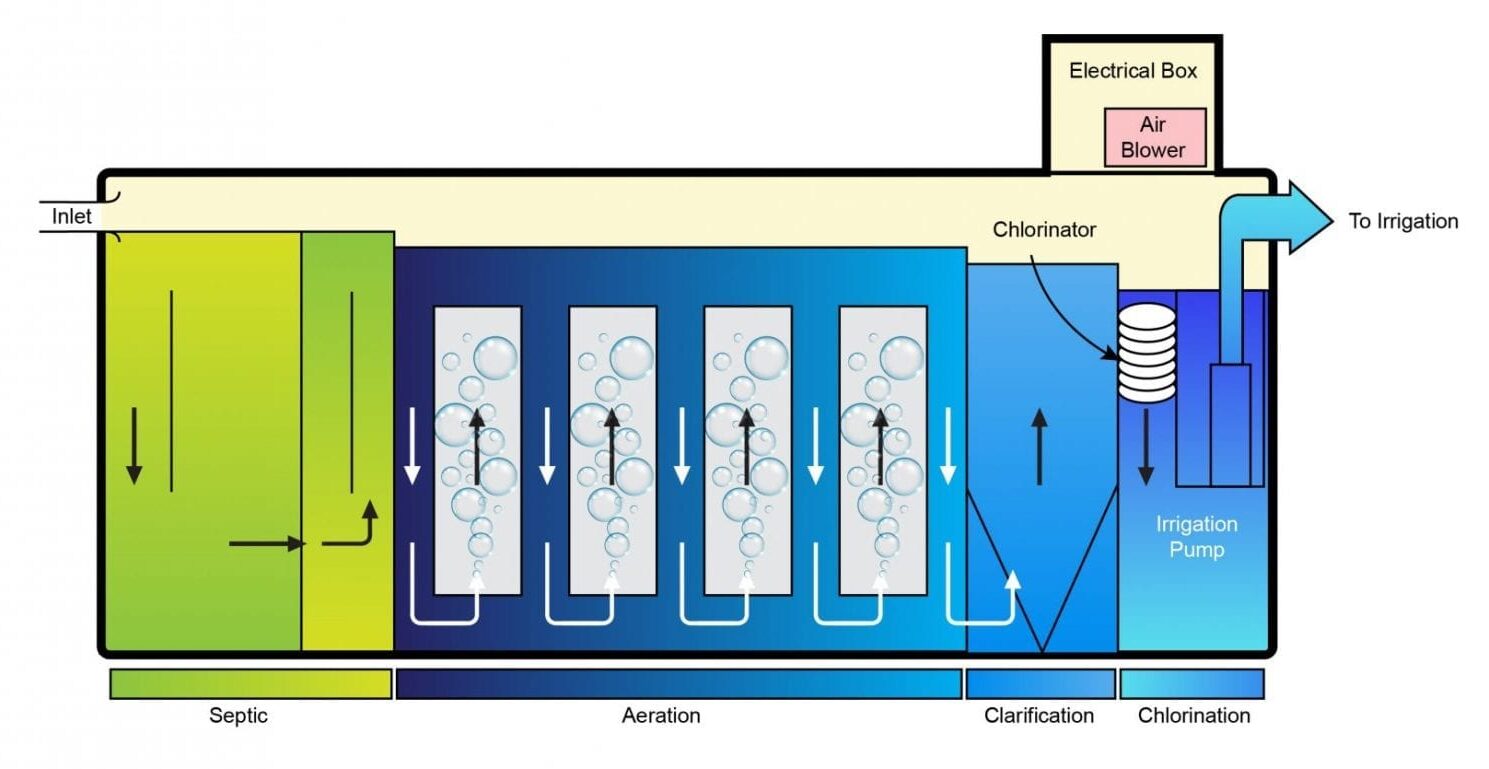
Septic systems vastly vary from traditional septic tanks, sand filters, rare evapotranspiration beds, and wetland systems to modern Aerated Wastewater Treatment Systems (AWTS) and Advanced Secondary Treatment Systems (STS), which are fast becoming the most popular choice of septic systems used throughout New South Wales, ACT and Victoria.
If you need help determining what septic system would suit your property, check out our article Septic Tank Buying Guide or get in touch for some friendly advice.
Remember to ask for a cost estimate for maintenance as well as installation and consider environmental impacts.
Garden Master has been an industry leader for over 30 years, manufacturing, supplying, and servicing quality wastewater treatment systems and septic tanks for thousands of clients across Australia.
Don’t hesitate to call us on 1300 856 237 with any questions!
The Department of Planning and Environment – Water website also includes helpful information and resources about sewage management – https://www.industry.nsw.gov.au/water/water-utilities